Implant-Retained Dentures in Essex
Implant-retained dentures are removable dentures held firmly in place by two to four implants per arch. They convert a loose conventional denture into one that stays seated through speech and eating without adhesives, while costing materially less than a fixed full-arch bridge.
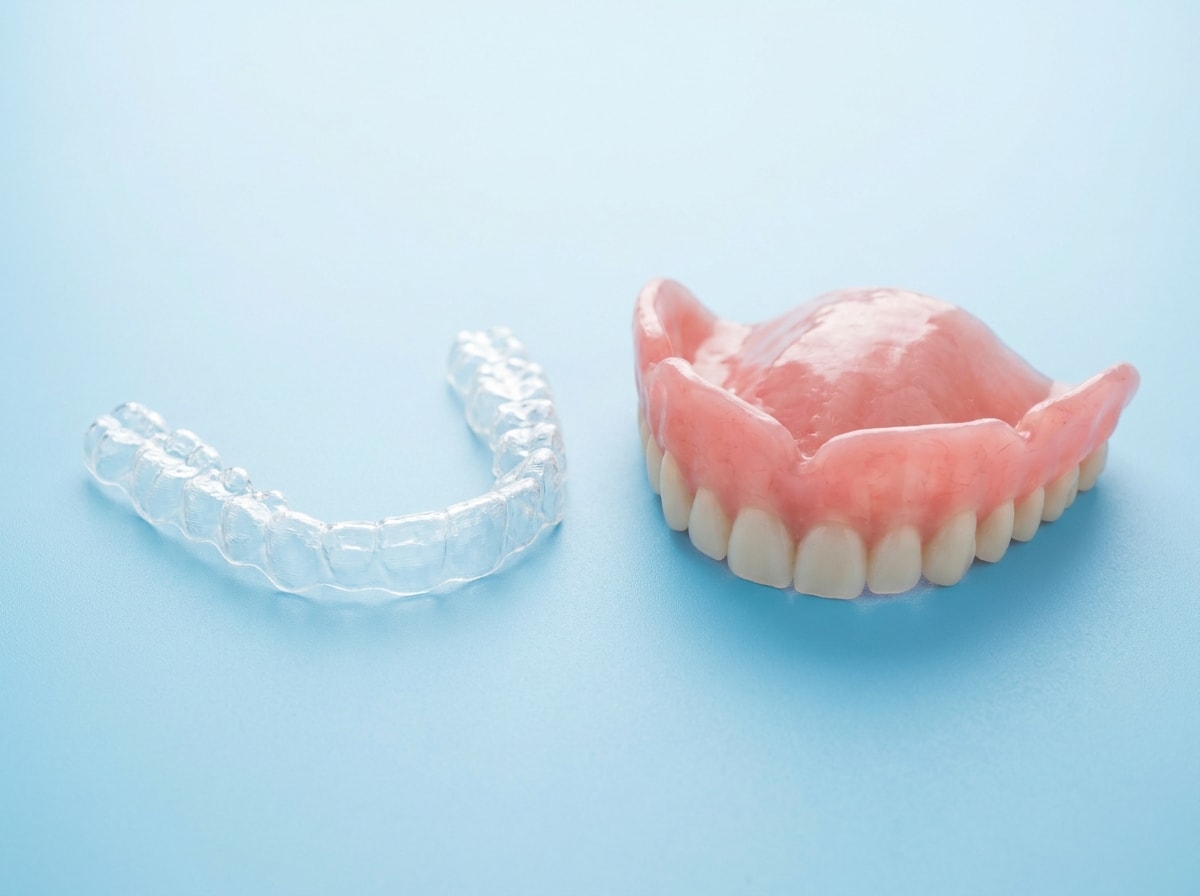
The clinical scope of implant dentures treatment
An implant-retained denture case usually starts with two implants placed in the lower arch (the lower jaw is harder for conventional dentures because there is less ridge surface area for suction retention). Four implants is the more common upper-arch configuration because the upper denture covers the palate and patients usually want to open the palate up.
Implants heal three to four months, then locator or bar attachments are fitted to the implants and the matching housings are processed into the underside of the denture. The denture clicks into place over the attachments and stays seated through normal function. The patient still removes the denture for cleaning.
Locator attachments are the lower-cost, easier-to-maintain option; bar attachments offer slightly better stability but require more space and component complexity. The matched clinician will recommend based on ridge anatomy and patient dexterity.
Variations the matched clinician should flag at consultation
Patients with severe ridge resorption may not have adequate bone for the standard two-implant lower overdenture configuration without grafting. Conventional shorter implants designed for limited bone volume are an option at some matched clinicians and avoid the grafting step.
Patients who struggle with dexterity for cleaning a fixed bridge are often better served by an implant-retained removable denture than by a fixed full-arch bridge. This is a useful matching question we ask routinely.
Patients with significant gag-reflex problems with conventional upper dentures sometimes benefit dramatically from a palate-free overdenture supported on four implants. This is a common matching driver among long-term upper denture wearers.
Anonymised worked examples
Lower two-implant overdenture, locator attachments, Southend SS1
A patient in their early seventies presented with a loose lower complete denture worn for fifteen years. Two implants placed in the canine positions, three-month healing, locator attachments fitted and processed into a new lower denture. Total fee at the matched clinician: £5,400.
Upper four-implant overdenture, palate cut back, Clacton CO15
A patient in their late seventies presented with a long-worn upper complete denture and gag-reflex symptoms. Four implants placed across the upper arch, three-month healing, locator attachments fitted and processed into a new horseshoe upper denture without palatal coverage. Total fee: £9,800.
Lower bar-retained overdenture, Brentwood CM14
A patient in their early sixties presented with poor manual dexterity and a poorly-retained lower denture. Two implants placed connected by a bar; the lower denture clipped onto the bar with two retention clips. Total fee at the matched clinician: £6,800.
Examples are anonymised case sketches drawn from matched-clinician reports. Identifying details are removed; fees and timelines are representative.
What the Essex panel typically quotes
Two-implant lower overdenture with locator attachments and a new denture typically falls in the £4,800-£6,500 range across the Essex panel.
Four-implant upper overdenture with locator attachments typically falls in the £8,500-£12,000 range.
Bar-retained configurations typically add £800-£1,500 over locator attachments.
Locator-attachment nylon inserts wear and are replaced every twelve to twenty-four months at a typical cost of £30-£80 per pair. This is ongoing-cost-of-ownership, not a one-off.
A replacement denture every five to seven years is typical regardless of attachment type; budget £1,200-£2,000 for the replacement.
How implant care is regulated in the UK
Implant-retained dentures are subject to the same GDC regulation as fixed implant work. The denture base itself is a custom-made medical device falling under the Dental Appliance regulations, which require manufacturer registration with the MHRA.
Essex towns with matched implant dentures clinicians
The matching panel covers the towns below. Each location page lists the postcode catchment, neighbourhoods covered, and the local NHS and council context.
Implant dentures questions answered
Common questions from Essex patients about this treatment, with specific figures where they apply.
Request a implant dentures introduction
We are an independent matching service. Free to the patient. We are not a clinic and do not provide treatment directly. The matched clinician quotes their own fees in writing.